Keep a Scorecard (and keep learning!)
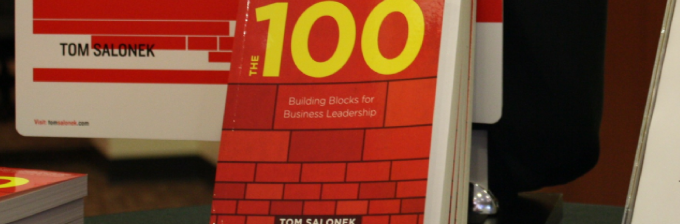
 If you read my book, The 100: Building Blocks of Business Leadership, you might (mistakenly) assume I’m done learning and implementing new business management ideas. Nothing could be further from the truth. In fact, one of the guiding principles at Intertech is “Keep Learning!”
In that spirit, Intertech’s leadership team read the book “Traction: Get a Grip on Your Business” by Gino Wickman. We were intrigued by Wickman’s Entrepreneurial Operating System (EOS), which addresses the six most fundamental aspect of any business: vision, data, process, traction, issues and people.
He notes, “Successful businesses operate with a crystal clear vision that is shared by everyone. They have the right people in the right seats. They have a pulse on their operations by watching and managing a handful of numbers on a weekly basis. They identify and solve issues promptly in an open and honest environment. They document their processes and ensure that they are followed by everyone. They establish priorities for each employees and ensure that a high level of trust, communication and accountability exists on each team.”
In addition to his book, Wickman runs a business helping organizations implement his EOS principles. On average, his clients’ businesses grow revenue by 18 percent per year. That 18 percent certainly peaked our interest! Isn’t it uncanny how numbers help to focus attention?
Since we already were following many EOS principles, we decided to begin with data. Wickman advocates developing a Scorecard as a means of using data in the form of metrics to “free you from the quagmire of managing personalities, egos, subjective issues, emotions, and intangibles by teaching you which metrics to focus on.”
Most of us look at profit and loss statements of course, but as Wickman notes, by the time key metrics are uncovered with a P&L statement it’s too late to do anything about them! With a Scorecard you get insight into your organization in close to real time. A Scorecard is:
- The financial pulse of the company.
- Comprised of leading indicators. A leading indicator is a signal that something in the future will impact your business. (A group called ITR Economics, which we’ve used for years, can help your organization identify your leading indicators.)
- Updated weekly
The first step in establishing our Scorecard was agreeing about which metrics were the strongest leading indicators. We started by outlining where we want to be in three years. There was good discussion about what we measure and target goals (as quantified with numbers). We’ve made some tweaks now that we’re in flight toward our 2019 targets.
Our Scorecard includes 15 metrics (the maximum number Wickman recommends) and is updated weekly. The metrics are shown in green to indicate that they’re on track. Red is used to show when they’re not on track. The metrics also are compared against what we’re aiming for in our three-year vision.
While the scorecard is updated weekly, at our monthly management meeting we have a discussion around the numbers. It’s typically a quick review unless we see red. Taking action early, when red becomes a trend, is why the Scorecard is a valuable tool.
Having the scorecard updated weekly keeps us all on the same page regarding our financials and critical numbers. But while the numbers typically “speak for themselves,” the story behind them sometimes is key to helping us know if something is just a temporary “blip” or the beginning of a negative trend that needs our attention. When the scorecard is sent out, there are a few paragraphs telling the story behind the numbers.
According to Gino Wickman, there are seven truths about the Scorecard. If you believe them, using a Scorecard could be just the ticket for getting you company on track toward the growth and profitability you seek. They include:
- What gets measured gets done.
- Managing metrics saves time.
- A Scorecard gives you a pulse and the ability to predict.
- You must inspect what you expect.
- You can have accountability in a culture that is high trust and healthy.
- A Scorecard requires hard work, discipline, and consistency to manage, but it’s worth it.
- One person must own it.
We’ve seen positive results from using a Scorecard and we’re committed to continue using it. To learn more about this smart management tool, check out Traction. It’s also a great way to keep learning!
Next time I’ll share how Traction helped Intertech improve our meetings.
 Guest Post
 If you’ve read my book, “
 Much like members of Congress must “reach across the aisle” to forge effective political partnerships, effective client-consultant relationships work best when both parties communicate, participate, treat each other with respect and share responsibility for outcomes.