TechJournal South
My thanks and congrats to their respective success at TechJournal South. Here’s my guest post, Five key lessons for tech startups, on their site.

TechJournal South
My thanks and congrats to their respective success at TechJournal South. Here’s my guest post, Five key lessons for tech startups, on their site.

Don’t expect to see someone’s true personality on a first date
An outside HR consultant once told me, “There are three places where you can’t always see someone’s true personality: on a first date, at church, and at a job interview.” This year, a Wall Street Journal article stated over 1 out of 10 people lie on their resume. When it comes to recruiting talent, as the saying goes, “trust but verify.”
Verifying a job candidate’s history is a key part of the interviewing process. Increase the odds of hiring someone whose personality, values, and work ethic match your own by thoroughly checking them out before extending an offer of employment. At Intertech, we do multiple verifications/assessments:
Consistently doing the above, helps us assess someone’s “real” personality. If you’re reading this and still in the dating scene, try one or more of the above steps and let me know how it goes!

Take each step. Don’t skip!
In a Harvard Business Review post on avoiding hiring disasters, it notes “A carefully crafted hiring process can help avoid most mishaps.” Further, “Needing to fill the role yesterday is not an excuse for shortchanging the process.” Both of these ideas are what Takeaway #2, Have a Process, in my book is all about.
At Intertech, we have nine steps in our hiring process. The steps are:
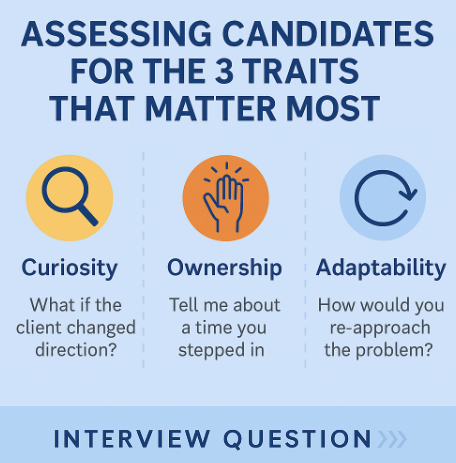
Along with following the process, in the same HBR article, it states “Screening for the right soft skills is critical.” I agree. People are hired for skill and fired for personality. Throughout our process, and particularly in steps #5, #6, and #7, we’re looking for a fit to our culture and values.
Finally, if we’re trying to talk ourselves into why this candidate is a good fit at any one of the steps, it’s probably a sign that they aren’t.

There’s a reason he always wins the race…
This is the first in a series of posts related to my book Building a Winning Business: 70 Takeaways for Creating a Strong Company during Good and Bad Economic Times. The first Takeaway is Hire Slowly. It’s related to a recent Harvard Business Review post on hiring. The post makes three points:
I agree lock-stock-and-barrel with point #1. In interviews, a common question for me is “Why are you hiring for this position?” My response is the same, “We’re always hiring.” It’s true. We’re always hiring top talent. I also agree on the second point that “It’s more than HR.”
The post suggests managers should actively be involved with hiring and hiring isn’t just the job of HR. Our managers have a “virtual bench” of candidates. The virtual bench concept is defined in the book Topgrading: How Leading Companies Win by Hiring, Coaching, and Keeping the Best People. In summary, it’s actively seeking out top talent who are happy in their current jobs and not looking to leave. We stay in touch with these top performers, in one example for more than five years, over lunches and coffee meetings. We do this because things change… the company they love today could be bought and all of its software development outsourced to India. Or, the manager they’d follow to the end of the earth ends up leaving the firm under duress and they employee now questions the firm and its leaders. I disagree with the last point of the Harvard Business Review post. Surprisingly, it was at Harvard that I developed this opinion.
The course leading professional service firms led by faculty chair Jay Lorsch repeatedly stressed the opposite… don’t hire fast. In the course they shared, “Top firms spend an inordinate amount of time in the recruiting process.” As an example, they shared an executive recruiting firm does 25-40 interviews per hire. 25-40 is a lot more than the six steps we run a candidate thru but the goal in a good hiring process is the same: Make prospects self-select out of the process if they’re not a good fit. More on this in my next Takeaway-related post.